Darwin
-
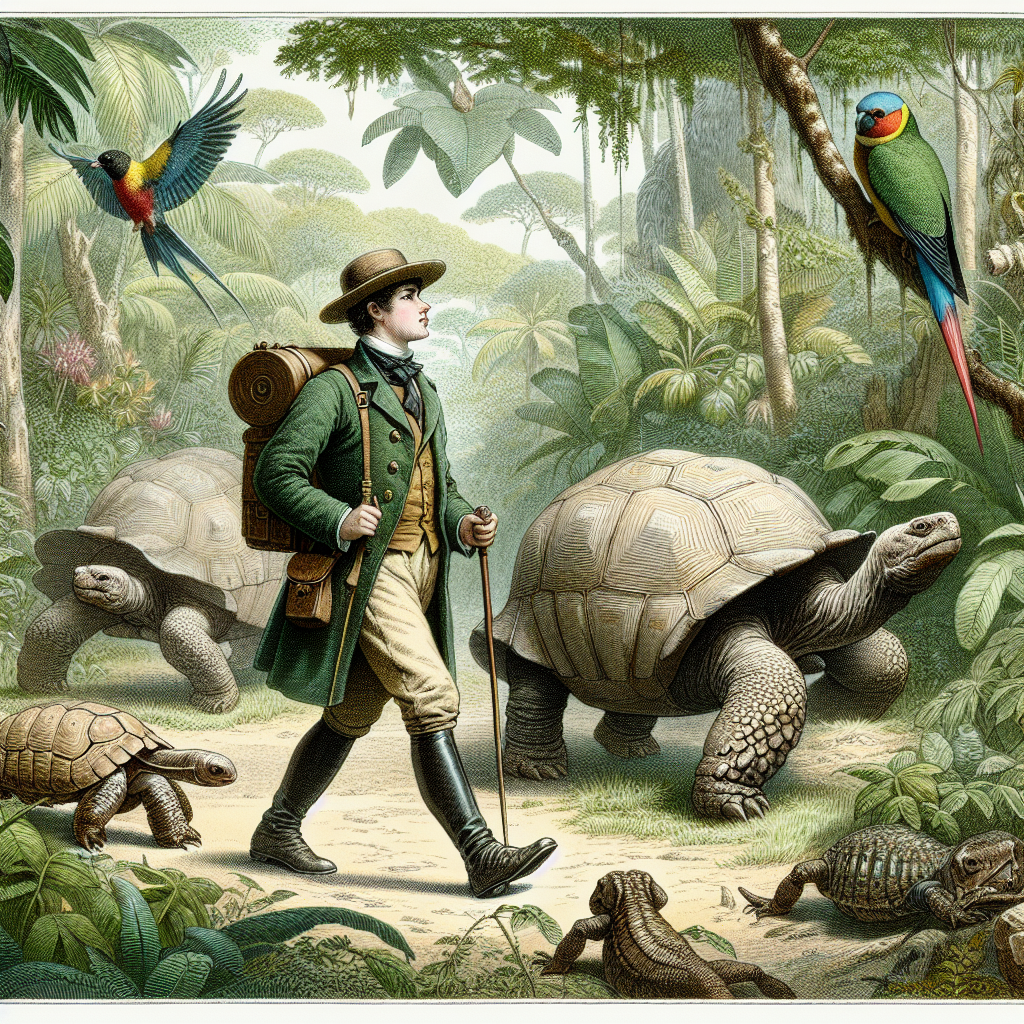
Take a break from relentless war coverage to read #EuropeanBios entry 71, Charles Darwin, whom you probably think of as this guy: an old, genius scientist who came up with the theory of evolution. Instead, I want you to meet his other, vastly different personality: Indiana Jones.
-
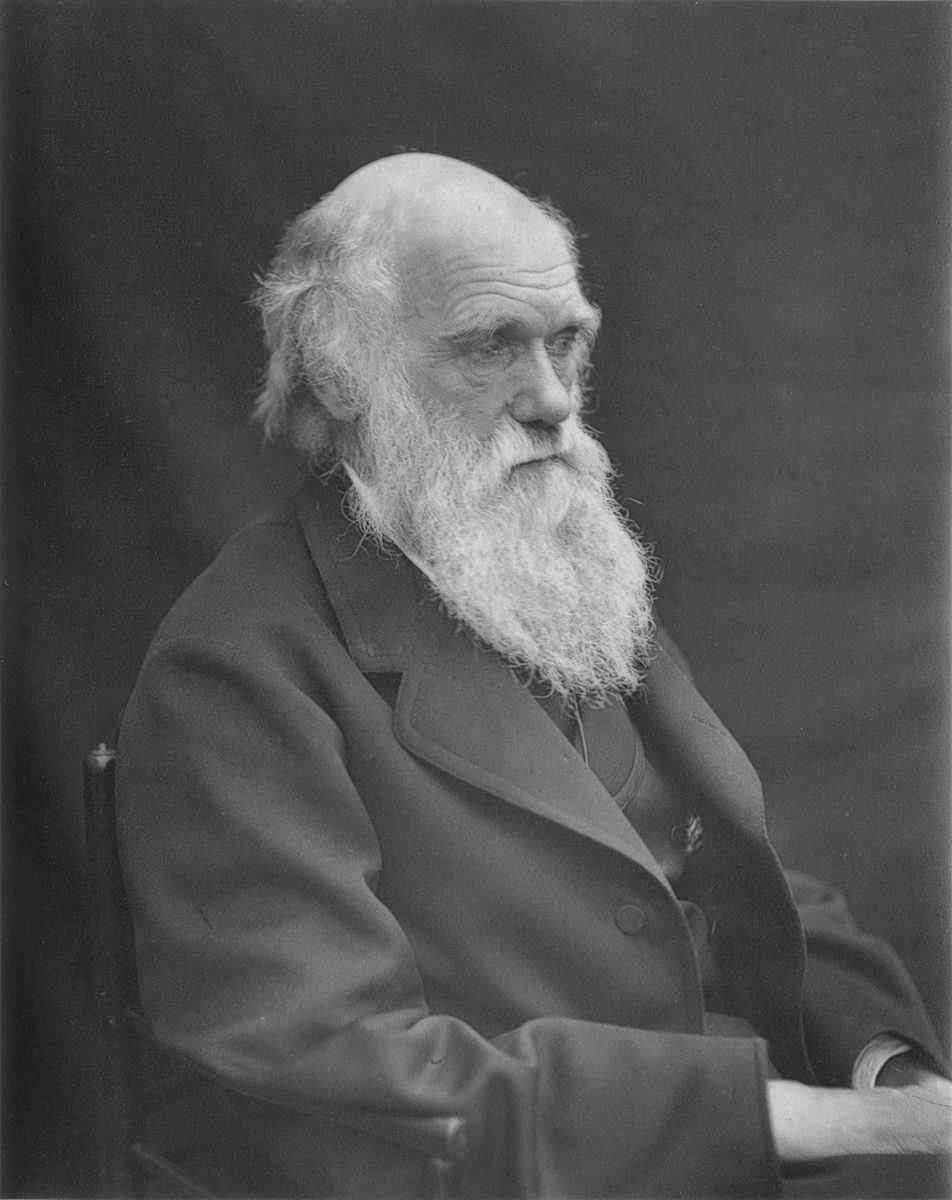
Photograph of Charles Darwin in later life — the iconic white-bearded scientist the world came to know Photograph of Charles Darwin, public domain -
Indiana Jones is an *amazingly* good model for young Darwin: - Dashing? Yes. - Adventurous? Yes. - Endures great hardship, for science? Yes. - Robs indigenous graves? Oh, yes. - Propagates extremely insulting racial stereotypes? Also yes. Not clear how good he was with a whip.
-
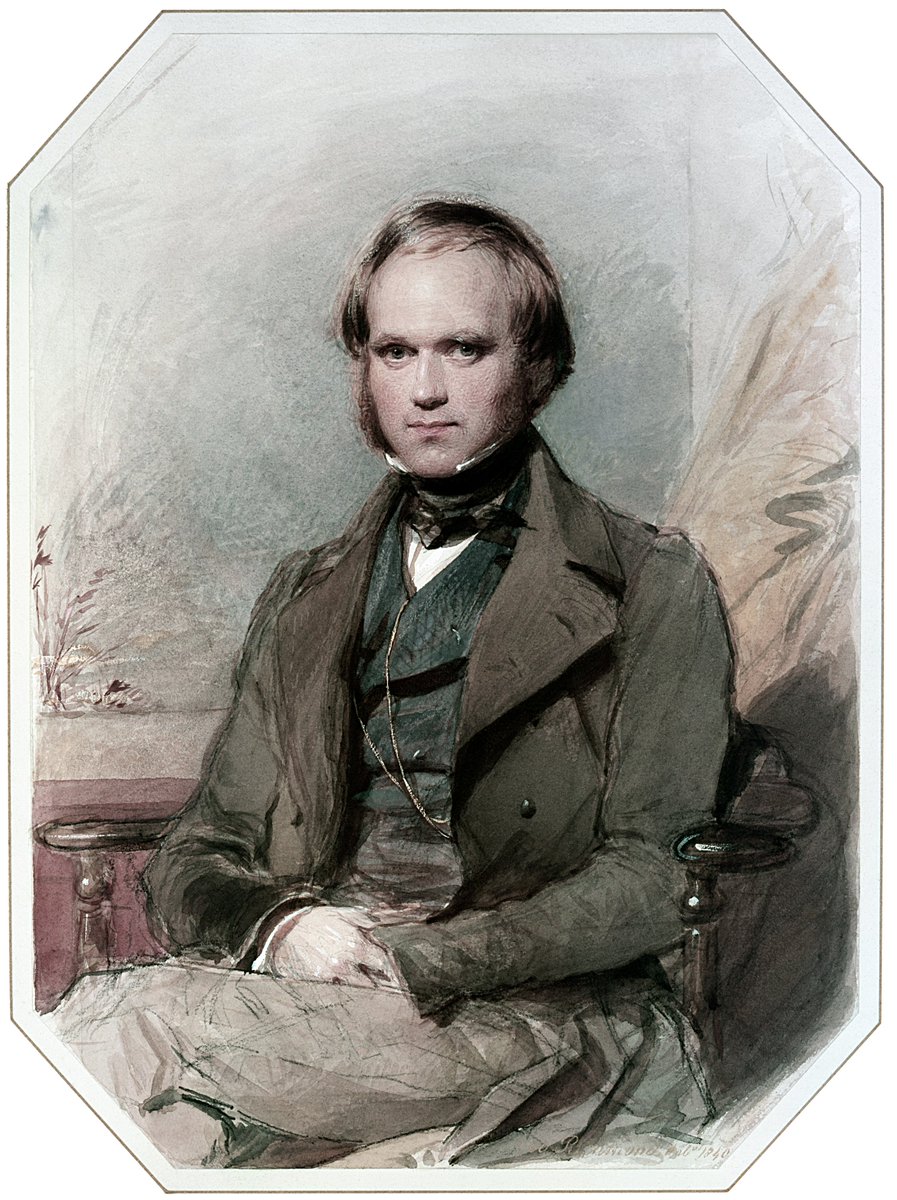
Portrait of young Charles Darwin by George Richmond, 1840, painted shortly after his return from the Beagle voyage George Richmond, Portrait of Charles Darwin, 1840, public domain -
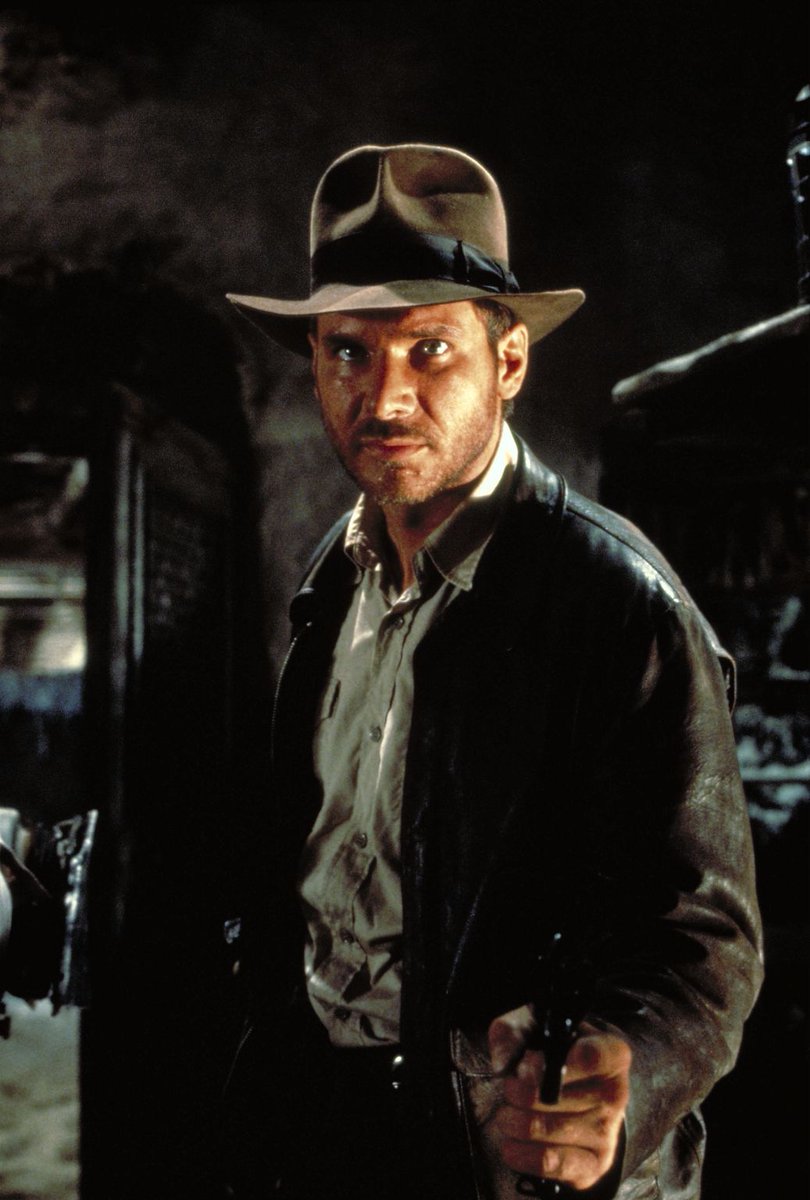
Harrison Ford as Indiana Jones, the fictional adventurer cited as "an amazingly good model for young Darwin" Raiders of the Lost Ark (1981), courtesy of Lucasfilm/Paramount Pictures -
Never have I had a biographical subject whose life was more divided into two halves. First is the Darwin who voyaged on the HMS Beagle, traveled around the world, risked life and limb for adventure. Then he came back, bought an English country house, and never left home again.
-
So let's go back to the start. Charles was born in 1809, making him 10 years younger than our previous subject who made major strides in our understanding of the history of life, Mary Anning. Unlike Mary, who was always broke, Charles was born very rich.
-
Charles' dad was Robert Darwin, who was a successful doctor. He sent Charles and his brothers to school to learn medicine but, aware that he would be inheriting his father's money and didn't really need the job, Charles did not apply himself.
-
At the time, surgical medicine was still basically a horror show, as anaesthetic was yet to be discovered, so surgeons had to work as quickly as possible before the patient died of shock from the pain. After witnessing surgeries as a student doctor, Charles quit medicine forever.
-
What young Charles was good at and interested in was having a good time. For him, this meant riding horses and hunting game and a certain amount of carousing with his friends. His father despaired that he would ever amount to anything, and considered him a bad seed.
-
Unable to convince him to get a real job, Charles' dad came up with a backup plan, and paid for him to attend Christ's College, Cambridge, with the intention of joining the clergy. But Charles was not religious enough for this, so he switched to a secular degree instead.
-
But hard-charging, horse-riding young Charles had a nerdy secret: a fascination with the natural world. For no reason other than they interested him, he collected beetles and interesting plants, and kept up with the emerging sciences of zoology and geology.
-
In one famous story he told himself, Charles once found two interesting beetles and was holding one in each hand when he spotted a third. Unwilling to let it get away, he popped one of the ones in his hand into his mouth but it "released an acrid liquid" and he coughed it out.
-
This interest at university brought him together with John Stevens Henslow, a botany professor. It was Henslow who, a few years later, recommended that Charles join the voyage of the HMS Beagle, which was looking for a gentleman scientist to join as a geologist.
-
A thing I always wondered was: what was the Beagle going around the world for in the first place? Its goal wasn't about biology or even geology: they were conducting a map-making expedition, nailing down, amongst other things, the exact longitude of Rio de Janeiro.
-
Having a geologist on board was the idea of the ship's captain, Robert Fitzroy. There was no space on the ship for an extra person, so Fitzroy let Charles share the captain's cabin. Charles' father, persuaded by Henslow, provided the funds for Charles to make the trip.
-
Thus the spoiled, lazy rich kid with a weird interest in bugs joined the Beagle for what was supposed to be a two-year voyage but ended up lasting five years, through an accident of personal connections and money, with no intention of studying the origins of life.
-
While Charles was sailing around the world on the Beagle, he started writing letters home and also mailing the specimens he was collecting. His correspondents started sharing his accounts publicly, with the result being that by the time he got home he was already a famous writer.
-
The public was hungry for more, so he wrote a book about the voyage, which was an immediate best-seller. It's an entertaining story of a young man who is indiscriminately interested in everything, from the hills and the rivers to the trees and the fish and the insects.
-
Charles reports on *everything*: the microscopic life in the oceans, the types of fish, the age and origins of the mountains, the types of rocks, the shapes of trees, the colors of the sunsets. It's a super power shared by our previous subject, Leonardo Da Vinci:
-
But he was a scientist of the 1800s, so he was not making passive observations of these things. If he's talking about a bird, it's because he's shot 4 of them. His discussions of the giant tortoises of the Galapagos include advice on the best way to cook them.
-
Everything is up close and personal. He describes views from mountains because he has personally climbed them, in expeditions that last weeks or months. He crosses deserts, going for days without water, all the while describing the lizards he finds under rocks.
-
He was, in short, a bad-ass. He describes the fire corals of the south pacific by personally testing them out on himself. He lives for weeks at a time on horseback, camping out under the stars and eating what he and his companions manage to hunt. He risks death many times.
-
But he was also very much a British man of the 1800s in another way, which is just blow-your-face-off levels of casual racism. His descriptions of locals drip with condescension; he routinely describes them as "savages" and "lesser races". It's really gross.
-
His colonial view of the world is also markedly capitalist: whenever he encounters a local society who do not have the grades of wealth and class with which he is familiar, he attributes their lack of "civilization" and "progress" to their lack of money and classes.
-
All of this is horrible but he does at least have a redeeming feature in that he is vehemently, firmly opposed to slavery, which was still an ongoing travesty in most of the world at the time he visited. His outspokenness gets him into trouble with his hosts a few times.
-
And then, like I said, he came back to England, and never left again. He didn't so much settle down as take permanent root, like a barnacle. He got back, got married, moved to a country home called Down House, and then lived there for 40 years, almost never leaving the village.
-
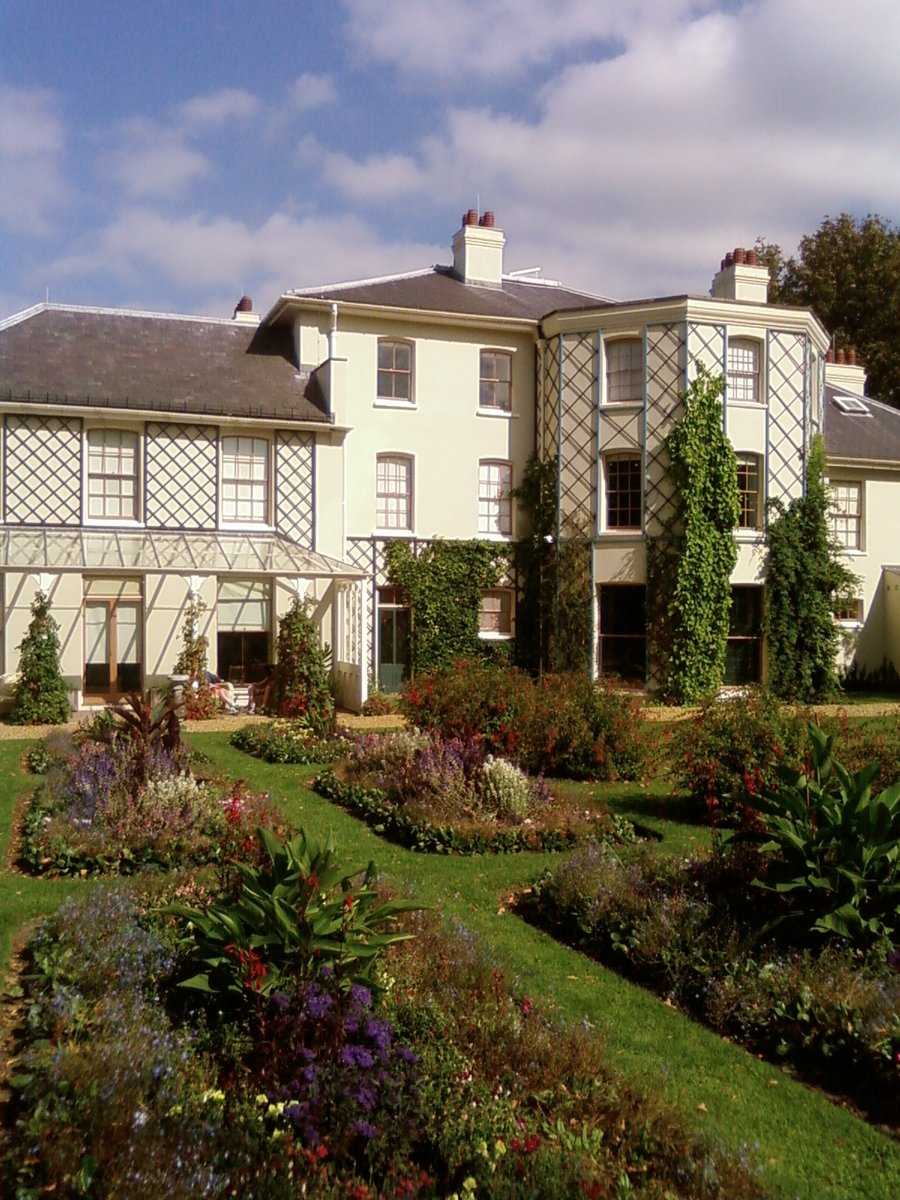
Down House, Darwin's country home in Kent where he lived for 40 years and wrote On the Origin of Species Down House, home of Charles Darwin, by Anthonyeatworld via Wikimedia Commons (CC BY-SA 3.0) -
(We will see in a bit why a description of Darwin as a barnacle is particularly appropriate)
-
It was not until he got back that he started sorting through his gigantic pile of unordered observations and thinking about the puzzles they posed. A year after the Beagle returned, he scribbled this in a notebook: the idea that species may form a tree, from a common ancestor.
-
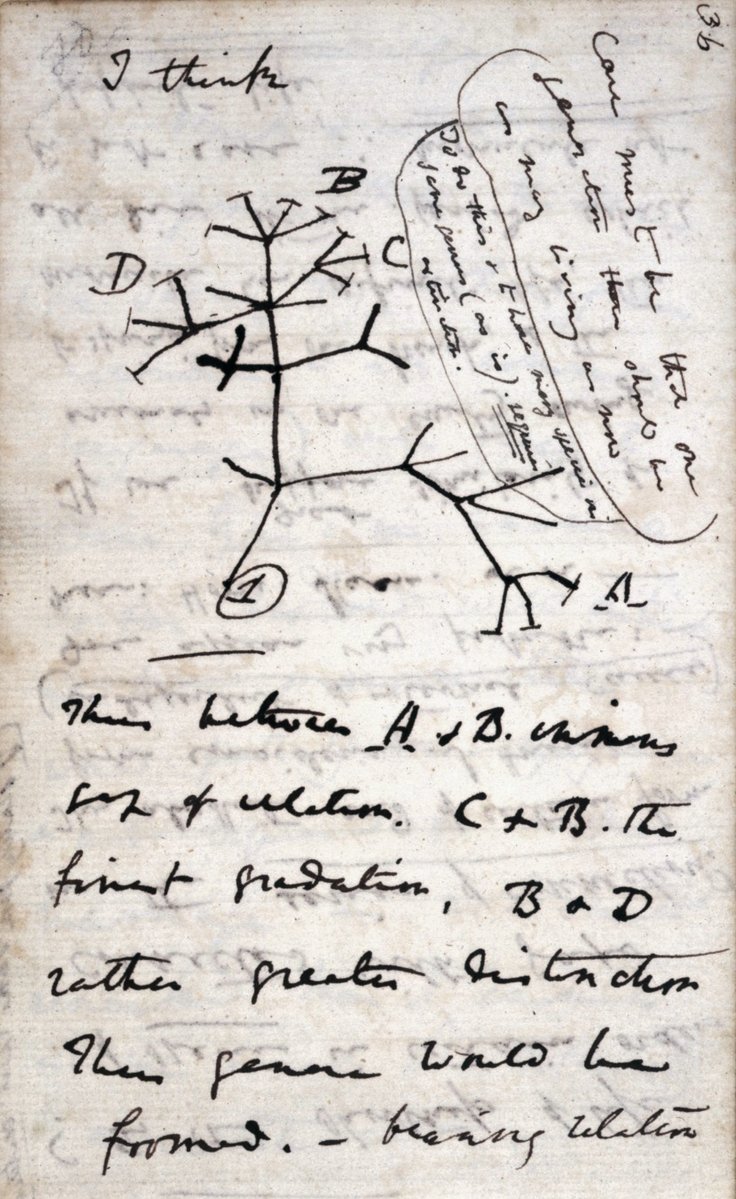
Darwin's "I think" sketch from his B notebook, 1837, showing his first branching tree of life diagram Charles Darwin, B notebook sketch, 1837, public domain -
This idea of a tree is Darwin's actual contribution to the theory of evolution. Scientists like Mary Anning had already shown that species that once existed no longer did. Others had written about "transmutation", where animals changed from one form to another slowly.
-
Charles' central insight was that *all* animals were related: that birds and fish and lizards and mollusks and everything else could all be traced in the fossil record getting closer and closer together in form, going back to some long-vanished common ancestor.
-
Merely observing that this seemed to be true was not enough for him, and he did not publish these thoughts. He knew his theory was shocking. He needed to explain not just that it happened, but also he needed an explanation of *how* it happened. And he found one, in four parts:
-
1: he observed that variation happens amongst animals. Some plants are taller, some plants are shorter. Some sheep are brown, some white. And these traits are, to some degree (that he did not understand or explain), heritable: tall parents make, on average, taller children.
-
2: he read the work of Thomas Malthus, who made the key insight that animals, given ideal conditions, will breed so that their population grows exponentially. But populations do *not* grow exponentially in nature: therefore, lots of animals are dying before they can breed.
-
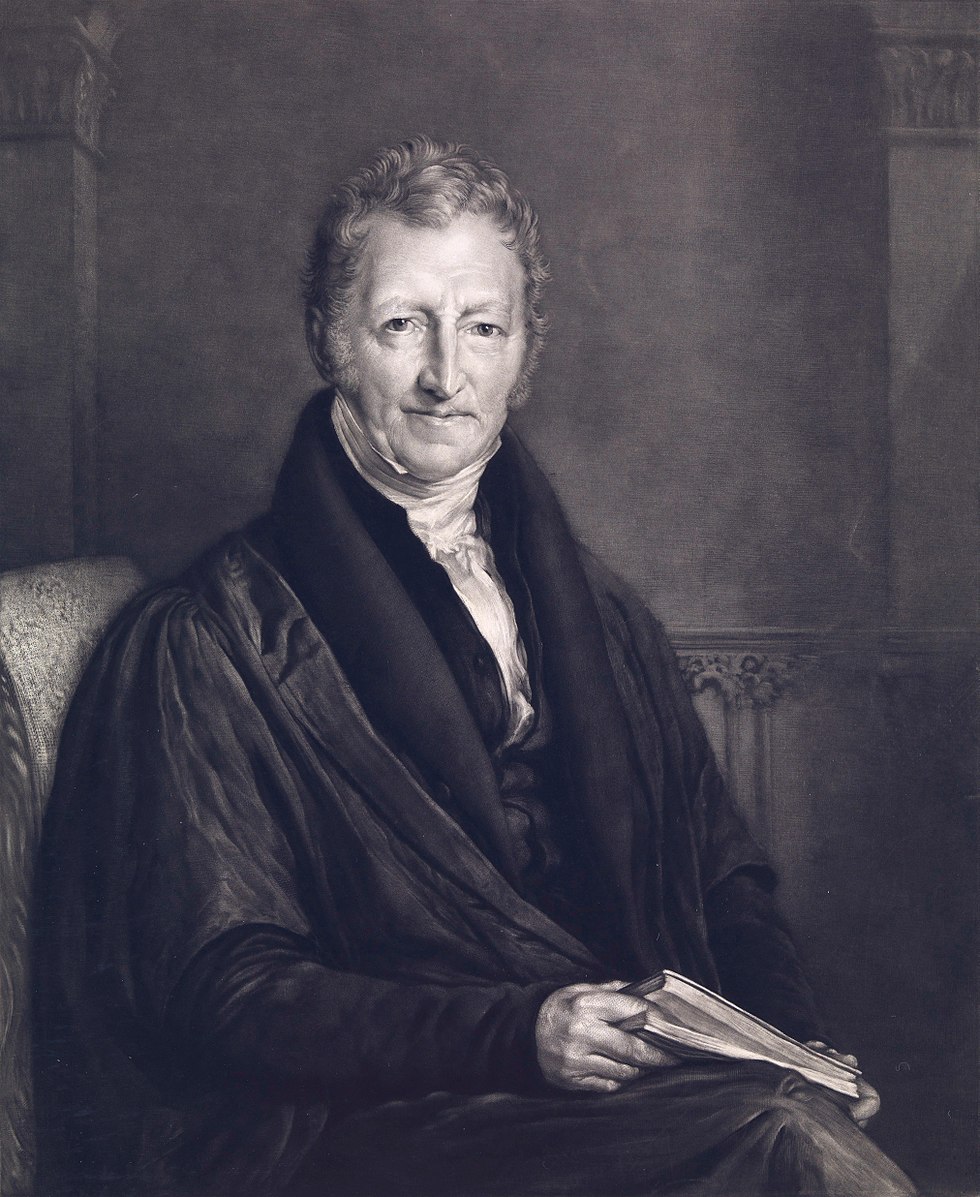
Portrait of Thomas Malthus, whose theory of population growth gave Darwin a crucial piece of the evolutionary puzzle Portrait of Thomas Malthus, public domain -
3: the fact that there are *too many* animals for nature to support, and that animals *vary*, creates a criteria for *selection*: animals with bigger teeth (or smaller ones), better eyesight (or no eyes), whatever works best locally, will out-breed the ones who don't.
-
4: finally, the earth is very, very, very old. Remember, the idea that the earth had been around longer than 4,000 years was controversial at the time. But for mountains to look like they did, they had to be many millions of years old. That gave natural selection *time* to work.
-
Thinking all of this through took him years and yet he still did not publish. He knew he was flying in the face of religious orthodoxy, which would get him in trouble with the public at large but also much closer to home: it would get him in trouble with his wife, Emma.
-
He married Emma a few years after getting back with the Beagle. He was very methodical about his decision to get married, and he picked a very conventional choice: Emma was his cousin, a member of the Wedgwood family (yes, of the pottery), whom many of the Darwins had married.
-
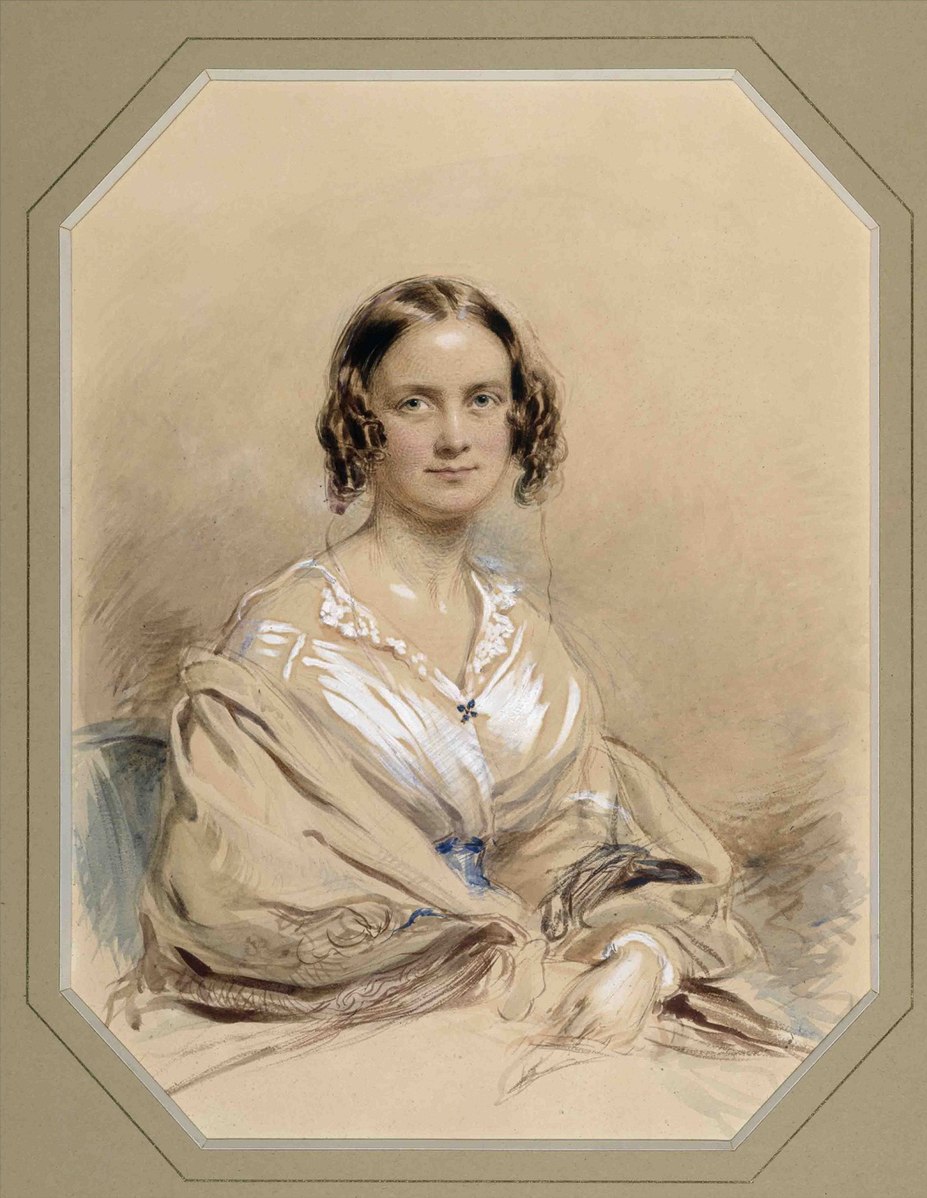
Portrait of Emma Wedgwood, later Emma Darwin, Charles Darwin's wife and first cousin Portrait of Emma Darwin, public domain -
Their marriage was certainly not a decision made out of passion. They were at best amiable, and had a number of children, but Charles' notes make clear that promises from his father and her father of providing enough money that he would never need to work again were the decider.
-
Emma was a very religious woman, and Charles by this point was not. In his autobiography, written with the intention that only his children would read it, he admits to being an atheist. The death of his father and one of his own children were what ended his faith.
-
So Charles hemmed and hawed and tinkered with drafts of his theory, sharing it only with a handful of friends. He worked on other things, including geology books and an astonishing 8 years that he devoted entirely to writing about the life cycles of barnacles.
-
After 8 years he was thoroughly sick of barnacles and his theory of species was well advanced. But he wanted to avoid controversy. He might well have waited until after his death to publish if his hand hadn't been forced by somebody else coming up with the same theory.
-
That man was Alfred Wallace. Working on the islands of the Malaysian peninsula, reading the same books as Darwin, he made similar observations of how animals vary on islands, and arrived independently at the idea of evolution, years after Darwin wrote his own first thoughts.
-
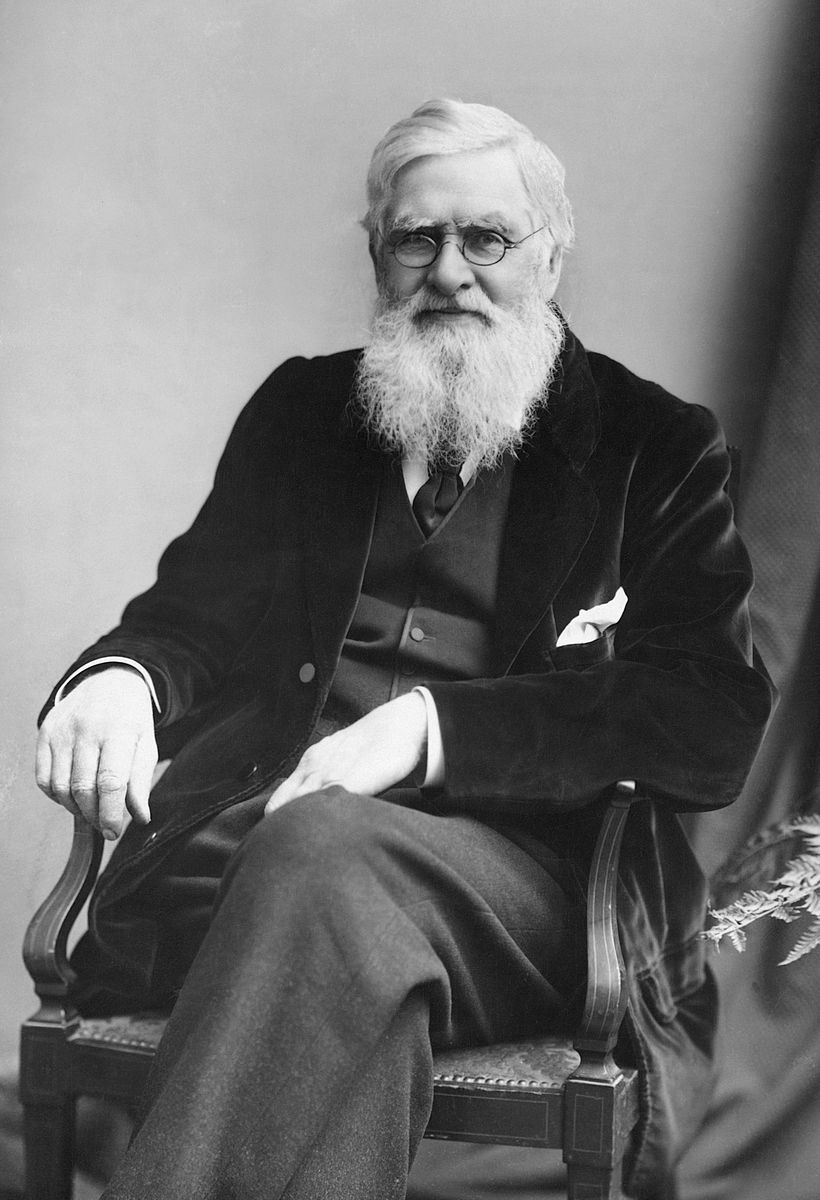
Alfred Russel Wallace, the naturalist who independently arrived at the theory of evolution, forcing Darwin to finally publish Photograph of Alfred Russel Wallace, public domain -
Alarmed that Darwin might be scooped by Wallace, mutual friends of theirs agreed to publish both theories simultaneously, without asking Wallace's permission first (since he was in Borneo at the time, it would have taken a year to get a reply to a letter asking permission).
-
Wallace might be expected to be a little pissed that Darwin thus took the lion's share of the credit, but in fact he was delighted. He was almost unknown at the time, so the fact that his theory was endorsed by somebody as famous as Darwin already was catapulted him into fame.
-
Charles' concern that his theory would cause religious blowback was 100% accurate. A theory which makes all animals interrelated products of random selection demotes humanity from the special creation of god to just another animal. This was a BIG problem for christianity.
-
Initially at least, he wrote nothing about humans at all. The Origin of Species says nothing about humanity, though his later books did. Nevertheless, people immediately saw the implications and criticism from religious figures and other scientists was fierce.
-
Darwin did not originally name his theory "evolution", in fact the word "evolve" appears only once in Origin of Species, in the very final sentence:
-
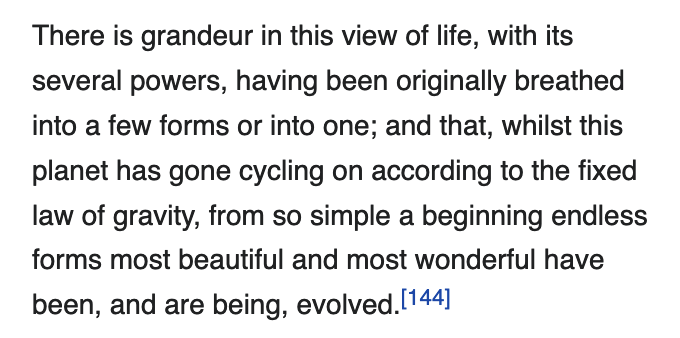
The closing lines of On the Origin of Species (1859), Darwin's single use of the word "evolved" in the entire book Charles Darwin, On the Origin of Species, 1859, public domain -
Darwin's theory did not immediately take over as the dominant one. Quite apart from being controversial, there were holes in the evidence available. For instance, estimates of the age of the earth were still too short, so it seemed there hadn't been enough time for it to work.
-
In later editions of Origins of Species Darwin accommodates these counter-arguments, rebutting them or amending his theory to suit, but in fact nearly all of the counter-arguments have since been debunked, so the original version of the book still makes the strongest case.
-
Darwin's legacy is to have co-created and thoroughly explained the theory of how life on earth adapts to an ever-changing planet. While it is at this point backed up by unassailably vast bodies of evidence, the theory is however hardly unchallenged: creationism continues today.
-
Unable to challenge Darwin on the facts, then as now many of the attacks are ad hominems on the man himself. Today, many of the available biographies of Darwin are criticisms of him as a person, written by religious zealots attempting to discredit his work in this way.
-
Darwin was far from a perfect person. A spoiled rich kid, a calculating self-publicist, a colonialist and casually racist, he was deeply flawed. But as you picture him on his horse, galloping across the deserts of Patagonia, you can be sure: he was also correct.
-
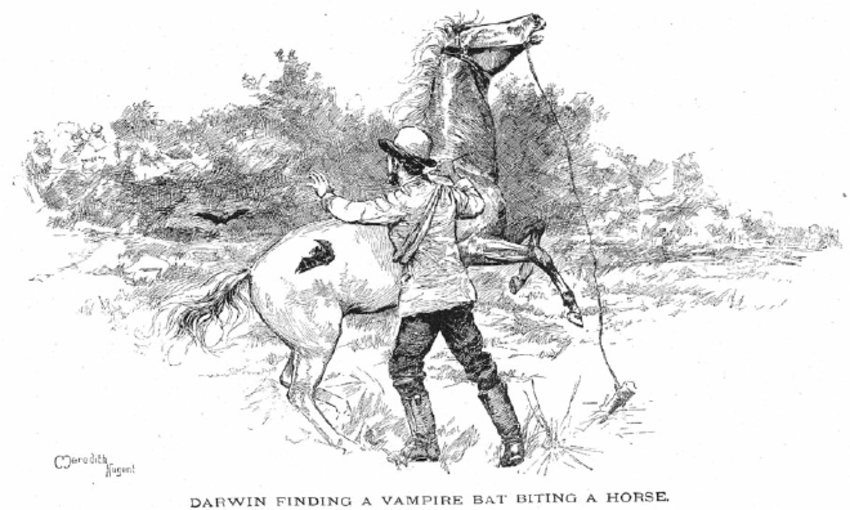
A Victorian anti-evolution cartoon mocking Darwin's theory, one of many that depicted humans as descended from apes Victorian anti-evolution cartoon, public domain
- Previously: Mary Anning
- Next: Otto von Bismarck
- Full list
Text and images copyright © 2020-2023 Laurie Voss
except where indicated
except where indicated